
Fitness is more than just having a toned body or spending hours at the gym. It is a lifestyle that focuses on improving physical health, mental well-being, and overall quality of life. In today’s fast-paced world, many people spend long hours sitting at desks, using smartphones, or watching television, which often leads to unhealthy habits. Regular exercise, a balanced diet, and proper rest can help prevent many health problems while improving energy, mood, and confidence.
Whether you are a beginner or someone who has been exercising for years, fitness is a journey rather than a destination. Every small step toward a healthier lifestyle contributes to long-term success. This blog explores the importance of fitness, its benefits, different types of exercises, healthy eating habits, and practical tips to help you stay motivated.
What Is Fitness?
Fitness refers to the body’s ability to perform daily activities efficiently without excessive fatigue. It involves maintaining good physical health, strength, flexibility, endurance, and mental wellness. Being fit doesn’t necessarily mean having six-pack abs or lifting heavy weights. Instead, it means having enough strength and stamina to enjoy everyday life while reducing the risk of illness and injury.
Fitness consists of several key components, including cardiovascular endurance, muscular strength, muscular endurance, flexibility, and body composition. Together, these elements help create a balanced and healthy body.
Benefits of Regular Exercise
Regular physical activity provides countless benefits for people of all ages. Here are some of the most important advantages:
1. Improves Heart Health
Exercise strengthens the heart and improves blood circulation. Activities such as walking, jogging, cycling, and swimming help lower blood pressure, reduce cholesterol levels, and decrease the risk of heart disease.
2. Helps Maintain a Healthy Weight
Regular exercise burns calories and boosts metabolism, making it easier to achieve and maintain a healthy weight. Combined with proper nutrition, physical activity supports long-term weight management.
3. Builds Strong Muscles and Bones
Strength training exercises improve muscle mass, increase bone density, and reduce the risk of osteoporosis. Strong muscles also improve posture, balance, and overall mobility.
4. Boosts Mental Health
Physical activity releases endorphins, often called “feel-good hormones,” which help reduce stress, anxiety, and depression. Regular workouts also improve self-confidence and emotional well-being.
5. Increases Energy Levels
Although exercise requires energy, it actually increases stamina over time. A fit body functions more efficiently, helping you feel more energetic throughout the day.
6. Improves Sleep Quality
People who exercise regularly often experience deeper and more restful sleep. Better sleep contributes to improved concentration, mood, and overall health.

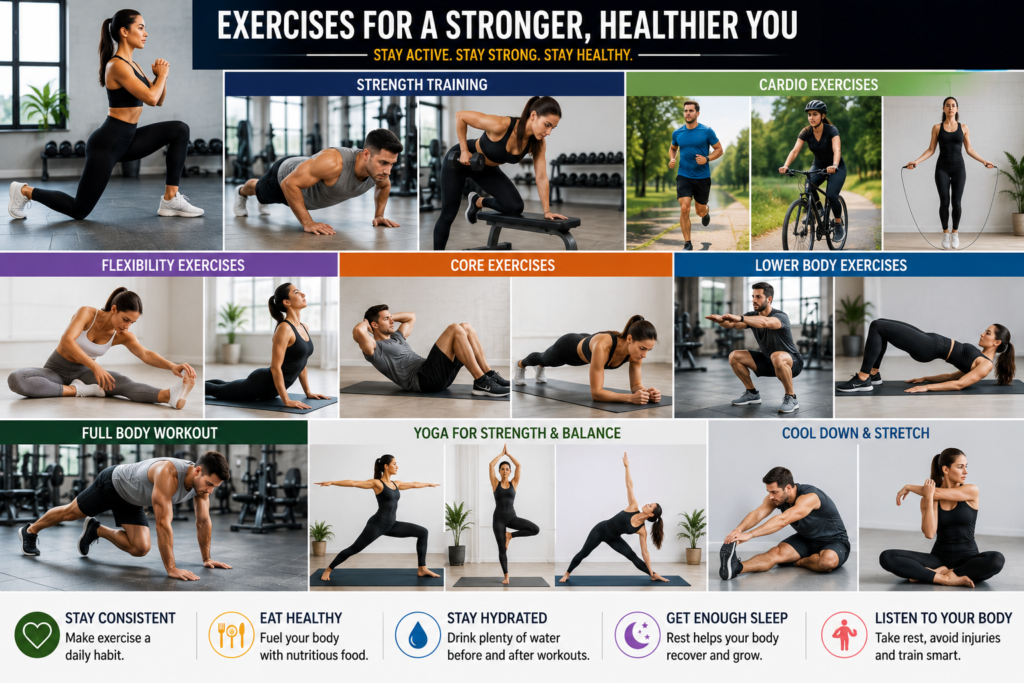
Types of Fitness Exercises
A complete fitness routine includes different forms of exercise to target various aspects of health.
Cardio Exercises
Cardiovascular exercises increase heart rate and improve endurance. Popular cardio workouts include:
- Walking
- Running
- Cycling
- Swimming
- Jump rope
- Dancing
Aim for at least 150 minutes of moderate aerobic exercise each week.
Strength Training
Strength training builds muscles and improves overall body strength. Common exercises include:
- Push-ups
- Squats
- Lunges
- Deadlifts
- Bench press
- Dumbbell exercises
Training major muscle groups two to three times per week is generally recommended.
Flexibility Exercises
Stretching improves flexibility, reduces muscle tension, and lowers the risk of injury. Yoga and Pilates are excellent ways to improve flexibility while promoting relaxation.
Balance Exercises
Balance exercises are especially beneficial for older adults, but everyone can benefit from them. Activities such as single-leg stands, tai chi, and yoga improve stability and coordination.
The Role of Nutrition in Fitness
Exercise alone is not enough to achieve good fitness. Proper nutrition provides the fuel your body needs to perform and recover.
Eat a Balanced Diet
A healthy diet should include:
- Fresh fruits and vegetables
- Whole grains
- Lean proteins such as chicken, fish, eggs, and beans
- Healthy fats from nuts, seeds, and avocados
- Low-fat dairy products
Stay Hydrated
Water is essential for maintaining body temperature, transporting nutrients, and preventing dehydration. Drink enough water before, during, and after exercise.
Limit Processed Foods
Reduce your intake of sugary drinks, fast food, processed snacks, and foods high in unhealthy fats. These foods provide excess calories with limited nutritional value.
Fitness Tips for Beginners
Starting a fitness journey can feel overwhelming, but following these simple tips can make it easier.
- Set realistic and achievable goals.
- Start with short workouts and gradually increase intensity.
- Choose activities you genuinely enjoy.
- Warm up before exercising and cool down afterward.
- Wear comfortable workout clothing and supportive shoes.
- Listen to your body and avoid overtraining.
- Stay consistent, even if progress seems slow.
Remember, consistency is far more important than perfection.
Staying Motivated
Many people begin exercising with enthusiasm but lose motivation after a few weeks. Here are some ways to stay committed:
Track Your Progress
Keep a workout journal or use a fitness app to record your achievements. Seeing improvements in strength, endurance, or weight can boost motivation.
Find a Workout Partner
Exercising with a friend makes workouts more enjoyable and helps keep you accountable.
Celebrate Small Wins
Every milestone deserves recognition, whether it’s completing your first week of workouts or running your first 5 kilometers.
Mix Up Your Routine
Trying new exercises prevents boredom and challenges different muscle groups.
Common Fitness Mistakes
Avoid these common mistakes to maximize your results:
- Skipping warm-ups and cool-downs
- Ignoring proper exercise technique
- Overtraining without adequate rest
- Following extreme diets
- Comparing your progress to others
- Expecting immediate results
Fitness improvements take time, patience, and dedication.
Fitness for Every Age
Fitness is important at every stage of life.
Children benefit from active play, sports, and outdoor activities that support healthy growth and development. Adults should combine cardio, strength training, and flexibility exercises to maintain health and reduce stress. Older adults should focus on balance, mobility, and strength exercises to maintain independence and reduce the risk of falls.
No matter your age, staying physically active contributes to a healthier and more fulfilling life.
Conclusion
Fitness is one of the greatest investments you can make in yourself. It strengthens your body, improves your mental health, increases your energy, and helps prevent chronic diseases. You don’t need expensive gym memberships or complicated workout plans to become healthier. Simple habits such as daily walks, balanced meals, staying hydrated, and maintaining consistency can lead to remarkable long-term results.
Remember that fitness is a lifelong journey, not a quick fix. Focus on building healthy habits that you can maintain for years to come. Every workout, every healthy meal, and every positive choice brings you one step closer to becoming the healthiest version of yourself. Start today, stay committed, and enjoy the incredible benefits that an active lifestyle can offer.